Considering the current topics that are floating around in the political environment, it's disappointing to me that I can't find time to blog. Every time I read the news, I'm reminded that, as a woman, my experience is not respected or even considered. I feel at the same time marginalized, infuriated, frightened, and motivated to action. I also find it fundamentally disturbing that in the year 2012, our politicians are immersed in a discussion about whether or not women have a right to preventive care that protects their health, as well as the health of their partners and families, and saves millions of dollars in costs associated with unplanned pregnancies and other complications.
And it seems that the recent war on women is not limited to birth control. Conservative senators who have supported the Violence Against Women Act for years are suddenly backing up because the newest renewal expands the ability for VAWA to protect Native women, extends the definition of domestic violence to encompass stalking, includes LGBT couples, and facilitates the provision of visas for survivors who are undocumented immigrants. "Personhood" amendments have been and continue to sweep across the nation's state legislatures in an attempt to prevent women from accessing abortion, which is both a legal right and a cost- and life-saving procedure. And I refuse to spend any time discussing additional restrictions on abortion, such as the trans-vaginal ultrasound bill that came out of Virginia, because they are just so completely atrocious.
Having said all that, I unfortunately can't offer my take today. I promise I will, soon, however. In the meantime, I wanted to direct you to an insightful post that expresses a lot of my thoughts, written by my roommate and friend over on her blog, Ugly Bird. Enjoy, and feel free to leave comments here as well if there are particular injustices you'd like to discuss.
Showing posts with label feminism. Show all posts
Showing posts with label feminism. Show all posts
Saturday, March 17, 2012


Saturday, October 22, 2011
Slutty.
One of my favorite holidays is coming up soon. Yup, that's right, I'm talking about Halloween. I love it. Or, perhaps more precisely, I loved Halloween. When I was little, I loved getting dressed up, being someone completely different, and getting rewarded for it with lots and lots of candy. Even when I was older, I still loved it. I loved the campiness, and considering that fall is my favorite season, I loved going out to haunted houses and such in the crisp fall weather.
However, lately, I've been losing my enthusiasm. Mostly it's because, as an adult woman to whom a Halloween costume actually means something as an expression of myself and my creativity (which usually translates into my knowledge of fantasy and superhero characters), I've run out of costumes.
I don't want to be a sexy bumblebee. It's such a cop-out. I've never thought, hey, wouldn't it be great to be a bumblebee? Or, wait, maybe a sexy bumblebee! That would really speak to how I want to express myself the one night where it's socially acceptable to wear a completely outrageous costume in public!
I'm not disparaging the sexy bumblebees (or the naughty Nemos, sexy watermelons, or stinkin' cute skunks). As absurd as "sexy" Halloween costumes can be (as the above links show), if an adult woman wants to wear one, then by all means, she should. I'm not going to put her down for it. I just don't want to do that myself. I'm not saying that I want to put on one of those Angry Birds costumes and feel totally cumbersome and uncomfortable in my costume either. On Halloween, I want to live up my fantasies and be something/someone awesome. For me, personally, that's not a sexy watermelon.
My costumes for the past four years have been as follows: Harley Quinn, Poison Ivy, a panda bear, and Trini, the Yellow Ranger on the original Power Rangers. You might see a pattern emerging. With the exception of the panda, I've chosen superheroes/villains because, on the one night that it's cool to do so, I want to be a fantastical, not to mention, an ass-kicking woman. And I did somewhat sex it up for the two villainesses. Given the opportunity, I enjoy feeling like a fearless, confident, even sexy fantasy character. All of the costumes were easy to make as well, given twenty bucks and a bit of time. While I love dressing up, I refuse to pay $50+ for a mass-produced costume made of cheap materials that I'm only going to wear once.
This year, I decided to switch it up. I'm going to be Batman. Not Batgirl, Batman (because who wants to be the token girl version when you can be the actual thing?). I'm not planning to buy the costume with the foam pecs and abs; I'm going to gender-bend Batman so that I can, as mentioned, feel confident and comfortable, as well as not spend a lot of money. But I was planning to get the Batman (not Batgirl) mask. So today, finding myself with 15 minutes between meetings, I decided to visit the seasonal Halloween store in my neighborhood to look for a mask. I asked a salesperson to direct me to the Batman masks, and as I was trying it on and laughing at how bizarre I looked with my female face in the hyper-masculine, angular mask (which was modeled after the Nolan Batman costume), I overhead this conversation between a father and his very young daughter:
Daughter: (looking at the tights selection, which includes thigh highs and fishnets and such)
Dad: Those aren't for you; those are for the big girls.
Daughter: Like mommy?
Dad: Yes, and also college girls who want to look slutty.
OH. MY. GOD.
I don't know if I detected a note of condescension in his voice since I was in earshot (in which case, fuck you, unknown dad, because I am a grown-ass woman who can choose for myself whether I want to look "slutty," and on top of that, it's unfair and misogynist of you to assume that all girls my age want that). But what took me aback even more was that he even uttered this word in front of his daughter, who could not have been more than four years old.
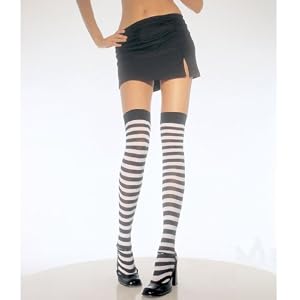
What is he teaching her about gender, sex, and sexuality by using words like that as normative? I know his daughter is way too young to think about the above concepts, but what's acceptable to expose your child to at this age will make a difference. At her age, shouldn't a word like "slutty" (and variations thereof) be off-limits as a "bad word?" What if she asks him what it means? "Oh, it's a word that people use to degrade women that they don't feel conform to patriarchal social norms. Sometimes, people use it to just put down women/a woman in general regardless of her actual sexual behavior." But I think from his casual usage of the word that, if asked by his toddler to explain what slutty means, he would not have offered the aforementioned description. And that's what makes it even worse.
By calling something (and, by inference, the girls who choose to wear that something) slutty, this dad is teaching his daughter it's okay to call people, specifically women, slutty. He's saying that one can make assumptions about women's worth based on their sexual behavior, or not even their actual behavior, but what they choose to wear. This word, and all words like it, are so very problematic. "Slut," "whore," "skank," etc., are all gendered words that relay a patriarchal, double standard on social expectations of sexuality. Furthermore, these words have been used to disparage women and reinforce misogyny in a variety of ways. For example, women who dress "slutty" deserve to be raped or sexually assaulted. Women in the public eye should dress well but not "slutty" (which can be as conservative as accidental cleavage) in order to be taken seriously. Using this word with a four year old implies that there are some hard-and-fast rules as to what slutty is, and that this will help identify women whose characters are lacking, and that if you avoid any "slutty" behaviors or wearing anything "slutty," you can avoid ever being a victim of that word and the full onslaught of misogynistic barriers that are its foundations.
---
I would never use words like that with my children; I try to not use those words in general. If I had a daughter, I would make sure that I never impart to her that the way she chooses to express herself, whether through her behavior or her dress, says anything about her inherent value. I understand that when you're a parent, you probably never want to think about your four year old daughter wearing thigh high tights, and hell, I honestly wouldn't let my daughter--at any age, as long as she's still a child and living in my house--wear thigh highs. But I would do all this in the hopes that, when she is an adult, she will be conscientious, confident, and well-adjusted (and a feminist). And she'll understand that maybe I would disapprove if she decided to be a sexy bumblebee in college, but I would never make a judgment on her character for it.
It's unrealistic of me to expect all parents with daughters to be feminists, so I don't expect it. But I do expect that parents won't make their daughters feel like their self-worth is linked to the way they dress and their sexual behavior. I know that simply using the word "slutty" to describe tights to a four year old doesn't necessarily impart this message. I just thought that having a daughter would make parents, especially fathers, question what they teach their daughters, knowing that their daughters will face enough of an onslaught on their self-esteem and body image from the public and the media.
Maybe this expectation is unrealistic too. What do you think?
However, lately, I've been losing my enthusiasm. Mostly it's because, as an adult woman to whom a Halloween costume actually means something as an expression of myself and my creativity (which usually translates into my knowledge of fantasy and superhero characters), I've run out of costumes.
I don't want to be a sexy bumblebee. It's such a cop-out. I've never thought, hey, wouldn't it be great to be a bumblebee? Or, wait, maybe a sexy bumblebee! That would really speak to how I want to express myself the one night where it's socially acceptable to wear a completely outrageous costume in public!
I'm not disparaging the sexy bumblebees (or the naughty Nemos, sexy watermelons, or stinkin' cute skunks). As absurd as "sexy" Halloween costumes can be (as the above links show), if an adult woman wants to wear one, then by all means, she should. I'm not going to put her down for it. I just don't want to do that myself. I'm not saying that I want to put on one of those Angry Birds costumes and feel totally cumbersome and uncomfortable in my costume either. On Halloween, I want to live up my fantasies and be something/someone awesome. For me, personally, that's not a sexy watermelon.
My costumes for the past four years have been as follows: Harley Quinn, Poison Ivy, a panda bear, and Trini, the Yellow Ranger on the original Power Rangers. You might see a pattern emerging. With the exception of the panda, I've chosen superheroes/villains because, on the one night that it's cool to do so, I want to be a fantastical, not to mention, an ass-kicking woman. And I did somewhat sex it up for the two villainesses. Given the opportunity, I enjoy feeling like a fearless, confident, even sexy fantasy character. All of the costumes were easy to make as well, given twenty bucks and a bit of time. While I love dressing up, I refuse to pay $50+ for a mass-produced costume made of cheap materials that I'm only going to wear once.
This year, I decided to switch it up. I'm going to be Batman. Not Batgirl, Batman (because who wants to be the token girl version when you can be the actual thing?). I'm not planning to buy the costume with the foam pecs and abs; I'm going to gender-bend Batman so that I can, as mentioned, feel confident and comfortable, as well as not spend a lot of money. But I was planning to get the Batman (not Batgirl) mask. So today, finding myself with 15 minutes between meetings, I decided to visit the seasonal Halloween store in my neighborhood to look for a mask. I asked a salesperson to direct me to the Batman masks, and as I was trying it on and laughing at how bizarre I looked with my female face in the hyper-masculine, angular mask (which was modeled after the Nolan Batman costume), I overhead this conversation between a father and his very young daughter:
Daughter: (looking at the tights selection, which includes thigh highs and fishnets and such)
Dad: Those aren't for you; those are for the big girls.
Daughter: Like mommy?
Dad: Yes, and also college girls who want to look slutty.
OH. MY. GOD.
I don't know if I detected a note of condescension in his voice since I was in earshot (in which case, fuck you, unknown dad, because I am a grown-ass woman who can choose for myself whether I want to look "slutty," and on top of that, it's unfair and misogynist of you to assume that all girls my age want that). But what took me aback even more was that he even uttered this word in front of his daughter, who could not have been more than four years old.
OK, kiddo, this is what loose women look like.
What is he teaching her about gender, sex, and sexuality by using words like that as normative? I know his daughter is way too young to think about the above concepts, but what's acceptable to expose your child to at this age will make a difference. At her age, shouldn't a word like "slutty" (and variations thereof) be off-limits as a "bad word?" What if she asks him what it means? "Oh, it's a word that people use to degrade women that they don't feel conform to patriarchal social norms. Sometimes, people use it to just put down women/a woman in general regardless of her actual sexual behavior." But I think from his casual usage of the word that, if asked by his toddler to explain what slutty means, he would not have offered the aforementioned description. And that's what makes it even worse.
By calling something (and, by inference, the girls who choose to wear that something) slutty, this dad is teaching his daughter it's okay to call people, specifically women, slutty. He's saying that one can make assumptions about women's worth based on their sexual behavior, or not even their actual behavior, but what they choose to wear. This word, and all words like it, are so very problematic. "Slut," "whore," "skank," etc., are all gendered words that relay a patriarchal, double standard on social expectations of sexuality. Furthermore, these words have been used to disparage women and reinforce misogyny in a variety of ways. For example, women who dress "slutty" deserve to be raped or sexually assaulted. Women in the public eye should dress well but not "slutty" (which can be as conservative as accidental cleavage) in order to be taken seriously. Using this word with a four year old implies that there are some hard-and-fast rules as to what slutty is, and that this will help identify women whose characters are lacking, and that if you avoid any "slutty" behaviors or wearing anything "slutty," you can avoid ever being a victim of that word and the full onslaught of misogynistic barriers that are its foundations.
---
I would never use words like that with my children; I try to not use those words in general. If I had a daughter, I would make sure that I never impart to her that the way she chooses to express herself, whether through her behavior or her dress, says anything about her inherent value. I understand that when you're a parent, you probably never want to think about your four year old daughter wearing thigh high tights, and hell, I honestly wouldn't let my daughter--at any age, as long as she's still a child and living in my house--wear thigh highs. But I would do all this in the hopes that, when she is an adult, she will be conscientious, confident, and well-adjusted (and a feminist). And she'll understand that maybe I would disapprove if she decided to be a sexy bumblebee in college, but I would never make a judgment on her character for it.
It's unrealistic of me to expect all parents with daughters to be feminists, so I don't expect it. But I do expect that parents won't make their daughters feel like their self-worth is linked to the way they dress and their sexual behavior. I know that simply using the word "slutty" to describe tights to a four year old doesn't necessarily impart this message. I just thought that having a daughter would make parents, especially fathers, question what they teach their daughters, knowing that their daughters will face enough of an onslaught on their self-esteem and body image from the public and the media.
Maybe this expectation is unrealistic too. What do you think?
Monday, October 3, 2011
my unexpressed rage.
This post originally started as a rant on an incident of street harassment that I experienced a few days ago. Yet, the purpose of that post was mostly to unwind and let go of my anger at the incident. I realized that, although it made me feel much better, it ultimately didn't contribute anything to my blog.
I've written about street harassment before. In that post, I described deciding whether to express my rage at being harassed as a conflict between safety and power. More and more, however, I'm realizing that the conflict isn't that simple. Yes, there are elements of safety that often inform my decision to stay silent and pretend like nothing's happening, like I can't hear the catcalls. But if safety were the only factor contributing to my disempowerment, then why wouldn't I take a chance when I can, when safety isn't as much of a concern, to express my anger?
This time, I had no concern about safety. I was walking home well before sunset, and the incident occurred at a bus stop with students standing around waiting for the bus. I didn't even see it coming, so preoccupied I was with how I was progressively getting sweatier and more disgusting carrying my large bag of groceries up a hill. In other words, I didn't even look at the guy or have a chance to assess whether or not he seemed like a threat. So when he murmured, "hey cutie," as he was passing by, his voice too low for anyone else to hear his misogyny, why didn't I draw anyone else's attention to it? Why didn't I tell him to fuck off? Why didn't I give him an impromptu lesson on how he was infringing on a woman's right to be in public unharassed?
I don't know. I just didn't. By the time I registered that I should give him a vivid description of where exactly he could shove it, it was too late. I would have to turn around, run back to get within earshot, and then yell like a lunatic at him as he walked away. And so I kept walking, seething in my complicity.
Because that's exactly what it was: complicity. By repressing my rage at the injustices I face, I am complicit in reinforcing the inequitable social ideologies that make these injustices okay. Repressing my rage is just as good as, "Why can't you take a compliment?!" Repressing my rage is the same as, "I was just interested in what your heritage is." Repressing my rage is no better than saying, "Don't try to make it into a race/gender/whatever thing."
There is a book by a preeminent black feminist, bell hooks, called Killing Rage that I've been meaning to look into since I read the first chapter for one of my classes this quarter. In this introduction, hooks describes the "killing rage" she felt at a series of racist incidents that she experienced over the course of a day. One of her main points in this introduction is how black Americans have become skilled at repressing their rage, particularly those who move up on the socioeconomic ladder and want to gain access to the benefits of material privilege. Yet, by repressing and annihilating rage in order to assimilate, blacks become complicit in a racist structure that has no place for black rage.
Although hooks was writing specifically about the black community, her points resonated with me. I felt that they could apply to any marginalized community, whether communities of color, women, sexual minorities, or any other community. How many times have I repressed my rage at a racist/sexist incident? How many times have I then been complicit in reproducing the exact unequal structures that I despise?
Unfortunately, the answer is: too many.
Hooks is right. I'm afraid and even ashamed of my rage. If I express it, I will be ostracized. Yet, at the end of the day, every time I don't express it, I feel deflated and disempowered. I take to my blog as a crutch, a quasi-public way to tell the world that I do get angry at injustice. But really, it's not enough.
We discussed in class how hook's book title, Killing Rage, is a play on words. Not only is she talking about the intensity of the anger that she felt in response to her anecdote, she is describing that this rage must ultimately be "killed," in a way. It must be expressed productively, through organized, collective anti-racist struggle. I hope that I will become a part of this struggle in my own way, but I think that first I need to work on my own personal commitment to this and other struggles against injustice. I can read and write as much as I want about race and gender and culture and etc, but if I let myself be complicit in the structures that allow racism, sexism, xenophobia, microaggressions to exist, then how am I ultimately true to myself?
So, to begin with, I've started a list of microaggressions, all of which I have experienced multiple times, to which I need to work on better responses. Responses that allow me to express outrage, but are still appropriate and will hopefully cause the perpetrator to think instead of become hostile. Suggestions as to what you do (or even what you wish you would do) are appreciated!
What I'm Enraged About:
- Being asked where I'm from; no, where I'm really from (and if you'd like to read about a day in which I was asked this three separate times by three strange men, read this);
- Being called exotic, or a geisha, or a China doll, or anything else that "compliments" me by bringing my race into the equation in a stereotypical and offensive way;
- In addition to the previous, being called anything that relates to my appearance (e.g. the aforementioned "cutie") by strange men;
- Having people speak to my parents very slowly and loudly, because they have accented English, even though they've been in the US, using English in their jobs and day-to-day social lives, for over 30 years;
- Being told I'm "white-washed" or "acting white" or "not a real Asian;"
- Being told to "cheer up!" or "smile!" by strange men;
- Having strange men (again! of course!) say "konichiwa!" or "ni hao!" or variations thereof to me (luckily, though, I've never had Stanley Kubrick repeated to me);
- Having people (usually older adults I don't know very well) comment to me, in otherwise pleasant conversations, how they were once in China or Japan or Korea or some other Asian country once and how they loved it and how they love Asian art and Asian food and all things Asian (just like me!);
- Being unable to exist in a public space without regular street harassment, unable to live my mundane life doing my errands, riding the bus, walking home without a man hitting on me, uninvited and unwanted; and
- Being told that I look like (insert famous Asian or Asian American woman here, the most memorable example being "the sisters" who were detained in North Korea, a.k.a. journalists Laura Ling and Euna Lee, who aren't sisters) who I look nothing like.
Monday, May 2, 2011
to flip or not to flip: on choosing between safety and power.
i took an unjustifiably long time trying to decide what to wear this morning. i was trying to decide if a dress that i wanted to wear was see-through. it was a print on white, unlined, so i was iffy about it. but otherwise, it passed the standards that i apply to school and workday outfits: no cleavage, not obscenely short.
in the end, i decided to wear the dress because it wasn't see-through in the morning light coming in through my apartment windows, nor in the artificial light in the bathroom.
but of course, the idea that i made the wrong choice plagued me throughout the day so that i was constantly tugging and pulling and wondering if glances people were throwing my way were different than the everyday look of passersby. which should maybe teach me to wear things i feel comfortable in above all else.
regardless, i had almost made it home--i was walking up the hill to my apartment, in fact--when i heard it.
i don't even know what he said, honestly. it's just that when you hear it enough, you know what a catcall sounds like from the first word that leaves the harasser's mouth. it's the tone of, it is my right as a man to comment on your body because as a woman, you have no worth other than the way you look, nor do you have the right to walk in public places without being harassed.
he was in a car; i could hear it idling at the stoplight, but i didn't turn around. wouldn't give him that satisfaction. and i faced the dilemma that always comes up when i get harassed: do i flip or not?
flip, as in: flip him off. flip the bird. flip out. tell him exactly where he can shove it. tell him exactly how i feel, which is to say FUCK OFF. you have no right to comment on my body unprovoked. i have a right to be in public without being harassed, without being put down, without being reminded that, as a woman, men will always have the ability to make me feel unsafe.
i didn't flip. i never have before. after that sudden rush of anger that i always feel upon hearing the first syllables of a catcall, i get scared.
what if i flip him off and it makes him angry? what if he follows me home in his car? even if he doesn't follow me home, what if he follows me for a little, calling me a bitch, a cunt, and every single sexist obscenity ever known to man? what is harassment, which is a nuisance that i've faced many times, compared to what could happen if i stand up for myself?
i hate being scared. I HATE IT. because in a perfect world, (harassment wouldn't happen in the first place, but if it did,) i would be able to tell off the harasser without fear of repercussion. bystanders would help me give the harasser an earful instead of looking away or worse, telling me to calm down, jesus, it was only a compliment.
and i hate it because it always makes me choose against making myself feel powerful, choose against asserting that i have agency and personhood and that no one has a right to act like i don't or to take that away from me.
---
i recently watched a PBS Need to Know video about a project called The Persona Project. in this, a photographer took photos of women in an outfit that made them feel safe and one that made them feel sexy.
of course, the outfits were never the same, and there was often a huge difference, like jeans and a loose t-shirt for safe and a tighter fitting dress for sexy. the photographer mentions in the video that most women were adamant that they were dressing for themselves, that the sexy they felt was powerful, self-defined.
Watch the full episode. See more Need To Know.
power: i know how that feels. but vulnerability? i know how that feels too.i started this post with what i chose to wear today not because i think that it should make a difference. it shouldn't make a difference; i shouldn't be harassed regardless of whether i'm wearing a parka or a sundress.
at the same time, i've internalized the same thing that these women in the project have internalized. what you wear makes a difference in whether you feel powerful or vulnerable. i've internalized it so much that when i got home i stood in front of the mirror with a light directly behind me to see if my dress was see-through after all. and then i changed, because, hey, harassing someone is a great way to make her feel unsafe, insecure, and like she did something wrong.
and yet the truth is, i didn't do anything wrong. street harassment is not my fault; it is never the victim's fault, and i should know that better than anyone. i've taught workshops about gender norms, rape, and sexual assault; i consider myself a feminist and have read a good amount of feminist theory and modern feminist thought; i am a person with agency beyond what my ass looks like in a dress and who has a right to be free from harassment.
but it still made a difference to me. being a woman and wearing a dress made a difference to me.
being a woman and wearing a dress made me choose between power and vulnerability. and being a woman made me ultimately choose safety over myself.
Tuesday, October 26, 2010
my afternoon at the DMV.
today i had a very interesting (and frustrating) day. interesting enough to blog about, considering i've facebooked and tweeted about it and talked about it on the phone and i'm still fuming.
it started innocently enough. i've been putting off going to the DMV for weeks now, and i needed to go to get a CA driver's license in order to establish intent to become a CA resident so that i can get in-state tuition next year. every time i've "tried" to go in the weeks prior, i woke up too late to be able to make it to the DMV and back before my classes in the afternoon. last friday, i resolved to go and was ready to leave by 9:30, but then i looked online for directions and saw that all CA DMV offices were closed that particular day.
so i went today, after my classes ended at 1. granted, going in the afternoon guarantees a longer wait--in fact, i watched the average wait time reported on the DMV website creep up from 1hr16 to 1hr42 while i was on the bus. of course, there was a line out the door to get a number (to wait even more) when i got there.
waiting in line, the guy right in front of me started talking to me. which was actually fine. he was young-ish, around my age but older, and we had some things in common (like, he has brothers in chicago that he visits often, and we know how much i love talking about chicago), so we struck up a friendly conversation. i ended up sitting next to him in the waiting area and we kept on making small talk. at some point, he was suggesting places for me to go in LA, and i was saying how i liked microbreweries, and a middle-aged, white man in front of us turned around, made apologies for eavesdropping, and added to the conversation about microbreweries because apparently he worked for a restauranteur or something. which, if a little awkward, was fine, because the man seemed pretty socially adjusted, i.e. he had apologized for butting in. a little while later though, he asked me if i was thai. apparently, he has a friend who is thai who has mannerisms exactly like mine. so i responded in good nature--no, my parents are taiwanese. i think i was good-natured because, well, this was the first occurrence, and because this man seemed nice and not socially inept or weird/creepy in any way.
the second occurrence was an older man with a cane who sat down a seat away from me. randomly, he asked both myself and the young guy i was still talking to (who was also asian) what our heritages were. i thought it was really weird because it was completely out of the blue, it was the first thing he said to us, and he seemed a little off his rocker. he said he was sicilian and he was interested in our heritages. i answered truthfully and was polite but tried to not encourage any further conversation. after a bit of awkward back and forth, he stopped talking to me.
the last occurrence was on the bus home. i was playing around on my phone, and when i looked around a little to see where we were, the older, white man sitting behind me said, "hi." i kind of caught a glimpse of him and he seemed pretty strange, potentially homeless and possibly crazy, so my response--again, i try to be polite for the most part--was a short hi, i went back to playing on my phone and hoped that he wouldn't say anything else to me. five minutes later, he got up to take the seat that was vacated in the row in front of me. then, he turned around and asked me where i was from.
by now, i was fed up. i had dealt with other men talking to me that day that i didn't want to talk to; also, waiting for the bus, a homeless woman sitting in the sidewalk at the intersection by the bus stop had yelled incoherently at me and other passersby. so, quite naturally, i didn't want to talk to any more strangers. i just wanted to be left alone. i actually didn't even think about the question, "where are you from?" and how this man might have really meant "where are you FROM?" as in, not the US. i answered his question with the first answer that came to mind, "i'm from chicago." because after all, i am from chicago. i was born in the chicagoland area, i grew up there, i went to school in the city. it was my first, instinctual response, and i said it in a very curt and short way to discourage any further conversation.
it worked. he got off not too much longer afterwards and i could finally breathe a sigh of relief that i would no longer be harassed and faced with unsolicited attention and invasive questions.
experiencing it was annoying. but the weird thing about living day to day life as a woman of color is, you don't really think about it. people asking me where i'm from is a pretty common occurrence. scratch that, let me rephrase: MEN asking me where i'm from or some variant thereof, uninvited, is not something i'm a stranger to. and as much as i'm plugged into the current discourse on the theory behind behavior like this--perpetual foreignness of asians, exoticization and orientalism, street harassment of women, the patriarchal idea that women who don't respond to unwanted attention are cold hard bitches--when it happens to you regularly, you get desensitized. and, in the moment(s), you don't think about the larger social context that makes behavior like this okay.
it's only when it happens to you multiple times in one day that you realize...this is because i'm not white. this is because i'm a woman. and it's not okay, not at all acceptable, on many levels.
...
i don't go walking around with a big sign on my head that says: APPROACH ME. FEEL LIKE YOU HAVE THE RIGHT TO INTERRUPT MY DAILY ROUTINE AND WHATEVER I MAY BE BUSY DOING.
but essentially, i feel like that's what i'm doing because i'm a woman.
when i travel alone, i am guaranteed, GUARANTEED and i am not exaggerating, to have to deal with unwanted male attention. sometimes it's more distal, like catcalls and wolf whistles. sometimes it's proximate, like men actually approaching me to strike up conversation. most of the time, at least immediately (but not when you consider the social context that allows and even encourages this behavior), it's innocuous. most of the time, i am nice and polite but distant, because after all, for better or for worse, my parents taught me to be a nice girl, and as long as i don't feel threatened, i'll be polite.
i know i have a lot of things going against my favor. i'm a woman. i'm small and unthreatening. i'm not unattractive. BUT WHY IS THIS AT ALL OKAY? why is it appropriate or acceptable for strange men to commandeer my time and attention? why is it okay for strange men to interrupt me in what i may be doing to tell me that i'm pretty or ask me where i'm from? why is it acceptable for them to vocalize their judgment on my appearance to me (and i'm supposed to take it as a compliment?!) or ask me invasive personal questions? why is the acceptable social response for me to be nice? it's a no-win situation. if i'm not nice, i'll be a bitch and might even be harassed further (and less innocuously) for that. if i am nice, i'm perceived as warm and welcoming and therefore encourage further similar behavior.
and like i said, i don't walk around with a sign that says YOU SHOULD HARASS ME BECAUSE THAT'S OKAY. in fact, when i travel alone, i try to act aloof (because i know i'll be harassed!). i was wearing my sunglasses and intently focused on my phone when the third man today tried to approach me. by all cues of body language or common sense, i look like i don't want to be approached. because i don't. but yet it's okay for men to ignore that and approach me anyway?
and then that question. where are you from. what's your heritage. what are you. let me categorize and exoticize you and fit you into my orientalist perceptions of your culture. you are not me, so you must be something/from somewhere else. WHY IS THIS OKAY.
my cultural background, which i consider to be integral to my identity, is something that i don't even really talk about with acquaintances. it's something that i think a lot about, that i read a lot about, and when i'm going to share, VOLUNTARILY, of my own volition, insights about my race or ethnicity or heritage, i usually do it only with people i'm close to. so how is that question, or related questions, not incredibly invasive into my privacy?
and how racist is that? i don't go around asking random white or non-white strangers where they're from (as in, where they're "really from" and not where they lived). i only bring it up with people i've talked to for awhile if it comes up naturally in conversations. for example, when i meet other asians, usually at some point the conversation naturally progresses to our stories of immigration, however removed they are, and then we share. and if i have to ask the question outright because it's topical but hasn't been brought up directly, i'm always embarrassed and apologetic because the question itself is loaded with otherness and othering.
i know, again, a bunch of things are working against me. i'm not white, for one. i'm a woman, for another, which makes it easier for men to feel like they have a right to my answers, as explained before. i'm asian, and therefore must be an immigrant/child of immigrants, and on top of that, i'm even a little "exotic" looking and not easy to box into chinese or korean or japanese. but my own question that i want to ask all of these men when they ask me this question (but i never do because the socially acceptable response to what should be a completely socially unacceptable question is to be polite) is: how do ANY of these factors, about my race, my gender, give you the right, first, to my attention, and second, to ask me personal questions reeking of white male privilege?
the answer, of course, is one that i'll never get from these men.
this behavior is not okay. it's not okay at all. the only reason why it's still in the realm of social acceptability is because social acceptability is determined by white, male privilege and has not yet been broken down.
...
one day, i hope that street harassment will be recognized as misogynistic and inappropriate. one day, i hope that people who don't look white ("american") will no longer have to face an investigation into what is a very personal and complicated question of identity.
but until then, as a woman of color who has lived a fair number of years of young adult life, i unfortunately have resigned to these sorts of things as a common occurrence in my life.
though, that doesn't mean i can't resent, to the absolute bottom of my being, every. single. situation in which a man encroaches upon my personal space, my privacy, and my identity to behave in a way that they find completely acceptable.
Saturday, October 24, 2009
thoughts on november's elle
reason why i hate fashion magazines: lack of conscientiousness
- story about "gender disappointment," mostly about pregnant mothers who long for girls, and some of whom have paid a lot of money to try to ensure a girl, and who have to cope with depression after having boys. i am sure that this is an extremely difficult experience, compounded upon by PPD, but there is no mention whatsoever of rampant female infanticide and "lost girls" in less privileged parts of the world, parts of the world in which if these girls lived to university age would not enjoy the greater rate of graduation from college that American girls experience. places in which having a girl does not mean that she can be everything a boy can be plus you can dress her in pink and have tea parties--places where having a girl is viewed as a burden.
- article about the niece of deposed Sierra Leone president, who now owns a boutique in L.A. but grew up exceedingly rich in a country that was exceedingly poor and torn by violence. at her lowest points, she had to shop at Urban Outfitters instead of Chanel. again, not trying to marginalize her experience, but highlighting the lack of mention of the context in which Elle sets their stories and heroines.
- not to mention the gross over-generalizations about women propagated by the advice columnist.
Subscribe to:
Posts (Atom)
